Every home collects stuff over time—books, clothes, gadgets, old tools. But when does “junk” cross the line? This guide on household junk categories helps you sort through your belongings with clarity. You’ll learn how to keep, donate, recycle, or toss items wisely, understand clutter categories, and build a sorting system that fits your life and space.
Why Categorizing Junk Matters
Keeping your home clean and organized starts with one simple habit—categorizing your junk. When you know exactly what to keep, donate, recycle, or toss, you save time, reduce clutter, and make more responsible decisions. Sorting items into clear household junk categories brings balance to your space and peace to your mind.
Brings Clarity to Clutter
Clutter can quickly make a home feel stressful and disorganized. But when you sort everything into categories, it’s easier to see what you actually need.
You can separate clothes, papers, old gadgets, and décor into clear groups. Once you see these groups, decision-making becomes simpler—no more guessing or hesitation.
Categorizing also helps you spot duplicates or unused items hiding in storage. The result? A cleaner, more open living space that reflects order and calmness. Your home starts to look and feel more functional instantly.
Saves Time & Effort
Sorting your junk once saves countless hours later. Without a system, you might find yourself handling the same item over and over again, unsure whether to keep it or throw it away.
A structured sorting system—for example, labeling boxes as “Keep,” “Donate,” “Recycle,” and “Trash”—eliminates that confusion. Each item finds its place quickly, saving both time and energy.
This process also makes deep cleaning or seasonal decluttering faster. You can easily update your clutter categories every few months to maintain order without starting from scratch.
Helps You Be Responsible
Being organized isn’t just good for your home—it’s good for the planet too. When you know which items belong in each household junk category, you can make eco-friendly choices.
Instead of throwing everything away, you can donate usable items, recycle materials like paper, glass, or electronics, and properly dispose of hazardous waste. These actions reduce landfill waste and help your community.
Creating a small recycling or donation corner at home encourages everyone in your household to think twice before tossing something out. It’s a simple habit that makes a lasting difference.
Key Household Junk Categories
Below are the major categories you should use when sorting your belongings. Use this as a starting point for your system.
Everyday Use Items (Keep)
These are things you use regularly. Examples:
Donation-Worthy Objects
These are items in good condition you don’t need. Examples:
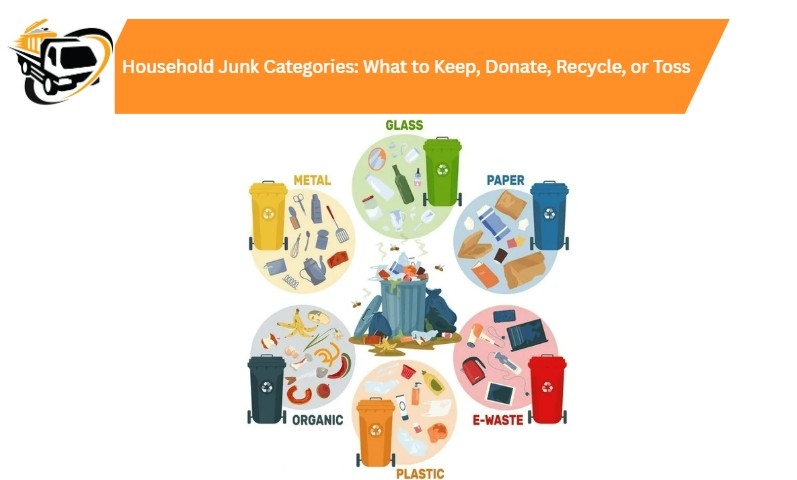
Recyclable Materials
These items can be transformed into new products. Common recyclables:
Hazardous & Special Waste
These items require proper handling. Examples:
Paints, solvents, cleaning chemicals
Batteries, electronics
Medical waste or sharps
Never toss these in regular trash. Use designated drop-off locations.
Non-Recoverable Trash
Once you’ve removed everything that can be donated or recycled, the leftover items go here:
Broken, unusable items
Items damaged beyond repair
Mixed materials that can’t be separated
These should be disposed responsibly, following your local waste rules.
How to Decide: Keep, Donate, Recycle, or Toss
Sorting your belongings into the right household junk categories makes decluttering less stressful and more rewarding. It’s not just about cleaning — it’s about creating a space that feels lighter, organized, and more intentional.
Use this simple sorting system to decide whether to keep, donate, recycle, or toss each item in your home.
Use the “30-Day Test”
If you haven’t used something in 30 days — or even one full season — ask yourself why. Chances are, it’s not adding real value to your daily life.
Try this: place the item in a labeled box for a month. If you don’t reach for it once, it likely belongs in your donate or recycle pile. This test helps remove emotional hesitation and makes decision-making faster.
For seasonal items, extend the test to a few months, especially for clothing, tools, or sports gear.
Check Condition & Safety
Before donating anything, check if it’s clean, complete, and safe to use. Donating broken or damaged items only adds work for donation centers and can even lead to waste.
If it’s something fixable, consider a quick repair. But if it’s unsafe or not worth fixing, it should go in the toss or recycle category instead. This way, your good intentions stay truly helpful to others.
Think of Space & Value
Even if something is useful, keeping too many items can still create clutter. Ask yourself: does this object earn the space it takes up?
If an item sits in storage for months without purpose, it’s likely time to donate it. A clean and open area always holds more value than unused clutter. Use your clutter categories to make space for what truly matters — not what just fills corners.
Understand Recyclability
Not everything labeled “recyclable” can actually be processed in your area. Many communities have specific rules about what materials they accept — especially for plastics, glass, or electronics.
Always check your city’s recycling guidelines before tossing items into bins. You can find this info online or by calling your local recycling center. By following the right process, your keep donate recycle efforts truly benefit the environment and keep hazardous waste out of landfills.
Building a Sorting System for Your Home
The Four-Box Method
Start with a simple yet effective system: use four labeled boxes — Keep, Donate, Recycle, and Trash.
This visual approach makes sorting easier and keeps you focused on what truly matters. Move through one drawer, shelf, or corner at a time, and don’t rush — steady progress is better than none.
Work Room by Room
Instead of trying to declutter your entire house at once, break it down room by room. Begin with high-traffic areas like the kitchen or living room, then move to bedrooms and storage spaces. This strategy keeps you organized and prevents burnout while giving visible results in each zone.
Use Timed Sessions
Decluttering doesn’t need to take all day. Set a 20–30-minute timer and focus on one area per session. When the timer goes off, take a break and come back refreshed. Consistency is key — even short bursts of effort can lead to major improvements over time.
Track What You Discard
Keep a record of items you’ve donated or recycled. This small step helps you stay motivated and shows how much space you’ve reclaimed. It’s also useful for tax deduction tracking when donating valuable items. Watching your progress grow encourages you to keep the momentum going.
Tips to Maintain Low Clutter
Adopt the “One In, One Out” Rule
A simple but powerful habit — every time you bring something new home, let go of one item you no longer use.
This rule keeps your space balanced and prevents clutter from building up again. It also makes you more mindful of future purchases and encourages smarter shopping decisions.
Monthly Quick Sweep
Set aside a few minutes each month to do a quick scan of your home. Check shelves, drawers, and closets for items slipping into the “don’t need” zone.
Regular mini-declutters take far less effort than a big cleanout and help your home stay neat all year long.
Donate Regularly
Keep a donation box ready at all times. When it fills up, drop it off at your local charity or donation center.
Making this a monthly or seasonal routine ensures items find new homes quickly instead of collecting dust in a corner.
Educate Household Members
Decluttering is a team effort. Teach everyone in your household — kids included — the importance of sorting and minimizing waste.
When everyone understands and follows the system, your home stays organized effortlessly and feels more spacious every day.
FAQs
Q: Are electronics always recyclable?
Not always. Some older devices or those with hazardous components require special e-waste recycling.
Q: What do I do with paint and chemicals?
Take them to a local hazardous waste facility or collection event—never dump them in normal trash.
Q: Can I deduct donations from taxes?
Often yes, if you get a receipt and itemize deductions. Check local tax rules.
Q: What if I don’t have a donation center nearby?
Some junk removal services partner with charities and provide pickup for donations.